

By Jerrod Douglas
Understanding the Security+ Certification: Your First Step in Cybersecurity
The Computing Technology Industry Association (CompTIA) Security+ certification is one of the most well known certifications for beginners. It is a foundational certification which gives a broad based introduction to a wide range of security concepts including general security concepts, threats, vulnerabilities & mitigations, security architecture, security operations, and security program management and oversight.
“The CompTIA Security+ certification exam will verify the successful candidate has the knowledge and skills required to assess the security posture of an enterprise environment and recommend and implement appropriate security solutions; monitor and secure hybrid environments, including cloud, mobile, and IoT; operate with an awareness of applicable laws and policies, including principles of governance, risk, and compliance; identify, analyze, and respond to security events and incidents” CompTIA.org
As a beginner, many of these concepts might sound overwhelming, so let me simplify why the Security+ certification is a great starting point for your cybersecurity journey. The Security+ certification gives you a broad overview of various cybersecurity aspects, helping you decide which path to pursue next. These paths can range from network security and cloud security to penetration testing or cyber defense. There are good alternatives to the Security+, such as the GIAC GSEC certification, but the Security+ is more cost-effective.
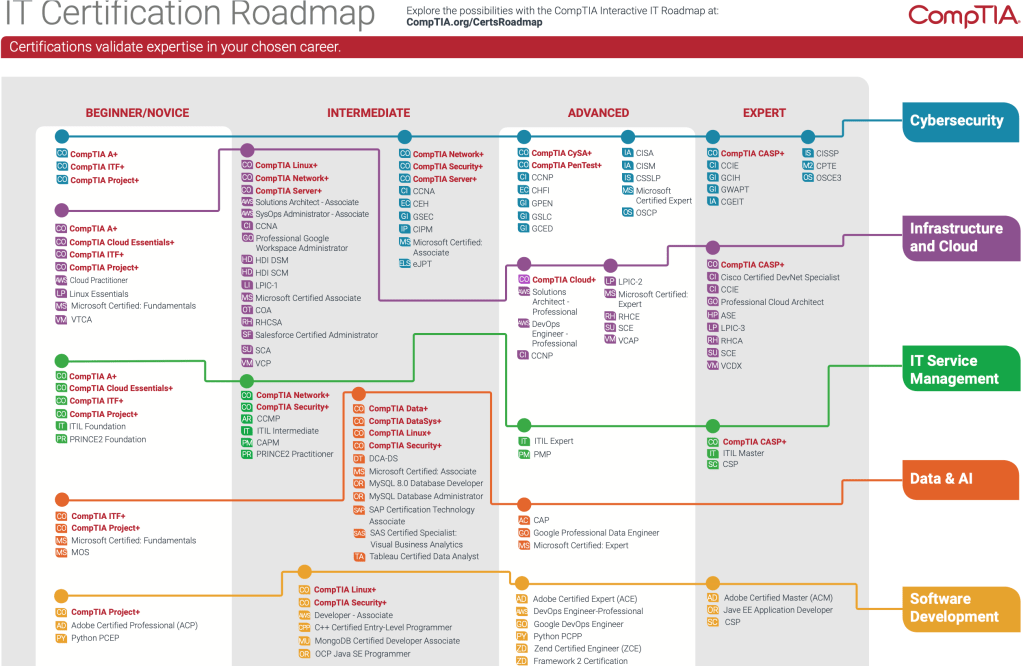
CompTIA IT Certification Roadmap
As you can see in the above roadmap provided by CompTIA which is one of the many good roadmaps you can find, the Security+ certification falls in the intermediate level category. Now you may ask “Jerrod, if I am a beginner why would I go for an intermediate level certification?”. I will discuss this in my next section.
The Value of Security+: Why This Certification Matters in the Cybersecurity World
Knowledge
The broad scope of the Security+ certification allows you to explore different areas within cybersecurity, helping you decide if this field is the right fit for you. If you are certain about a career in cybersecurity, you might consider skipping some beginner certifications listed on the CompTIA IT Certification Roadmap, as they might not be directly relevant to your chosen path. The Security+ certification also provides a solid introduction to networking concepts, which are crucial for any cybersecurity role. By the end of your preparation, you’ll have a good grasp of foundational security concepts and a clearer idea of your future career path in cybersecurity.
Employment
While passion is essential, we all aim for well-compensated employment. The Security+ certification is globally respected and recognized across private and public sectors. It meets U.S. DoD Directive 8140/8570.01-M requirements, which are essential for many government roles. However, it’s important to note that the Security+ certification alone won’t guarantee a job. You can complement your certification knowledge to increase your marketability, which I will discuss in a future post. For entry-level roles, the Security+ certification is your best bet due to its balance of affordability and industry recognition.
How to Study and Pass the Security+ Certification
There are numerous study materials available for the Security+ exam, but you’ll want resources that are up-to-date with the latest exam version (SY0-701). CompTIA offers its own study materials, and platforms like Udemy provide courses and practice exams. YouTube is also a valuable resource for understanding complex topics.
For the purposes of this blog, I will be giving the study materials and strategy I used. One important thing to note is BEFORE I sat for the Security+ exam I had completed my bachelor’s degree in Cyber Operations. With that being said, the study materials I used will be enough for a beginner with the dedication to learn the material and pass the exam.
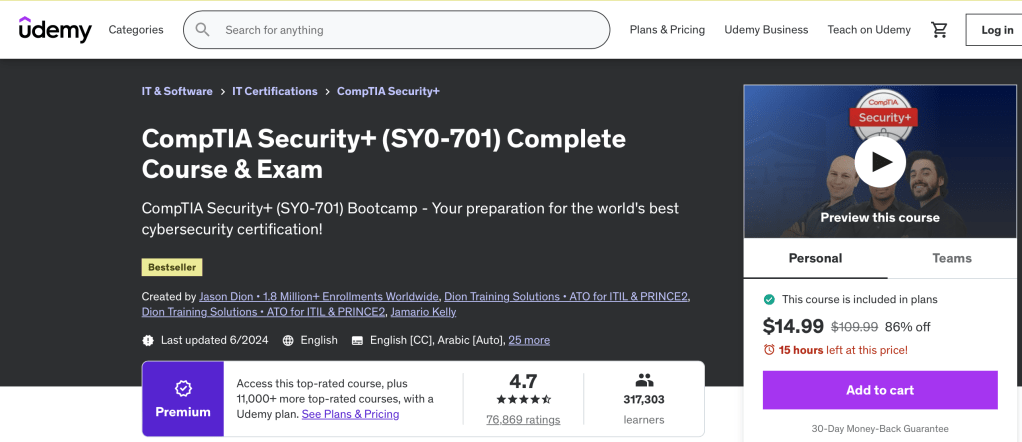
Study Material
For my preparation, I used the Jason Dion CompTIA Security+ Course & Exam on Udemy, which costs around $15. This course covers all exam topics thoroughly, and the included practice exam is reputed to be as challenging, if not more so, than the actual exam. Supplementing this with additional practice exams from Professor Messer can diversify your preparation. I highly recommend using ChatGPT to clarify concepts and create concise study notes.
Strategy
Given my background in Cyber Operations, my strategy may differ from that of a beginner. Start by reviewing the exam objectives to identify your strengths and weaknesses. Choose your study materials and create a realistic study schedule, factoring in time for practice exams. Discipline is key, so consider finding an accountability partner. Schedule your exam to set a concrete goal. If you need to reschedule, try to avoid it unless absolutely necessary. This approach helps maintain focus and commitment to your study plan
the way forward
After passing your exam, plan your next steps both professionally and educationally. With foundational knowledge, you can pursue further learning, enter the job market (depending on your current qualifications and experience), and decide on a specific cybersecurity career path.
If you fail the exam, don’t be discouraged. Failure is a delay, not defeat. Identify the areas where you need improvement, take a short break to recharge, and then dive back into your studies while the information is fresh. Repeated practice and review of wrong answers will prepare you for a successful second attempt.
Good luck on your exam and feel free to contact me for any other assistance!
 Data Science Insights with The Fit-Tech Guy
Leave a comment